An export industry that could reach NOK 100 billion by 2030

Revenue for Norwegian offshore wind companies increased by 450% from 2019 to 2024, rising from NOK 11 billion to NOK60 billion. Impressive for an industry without a domestic market, says Ivar Slengesol, who chairs the steering committee of the industry cluster Norwegian Offshore Wind. He is also frustrated by the lack of action from Norwegian politicians – when it is so obvious that offshore wind is something Norway should be investing in.
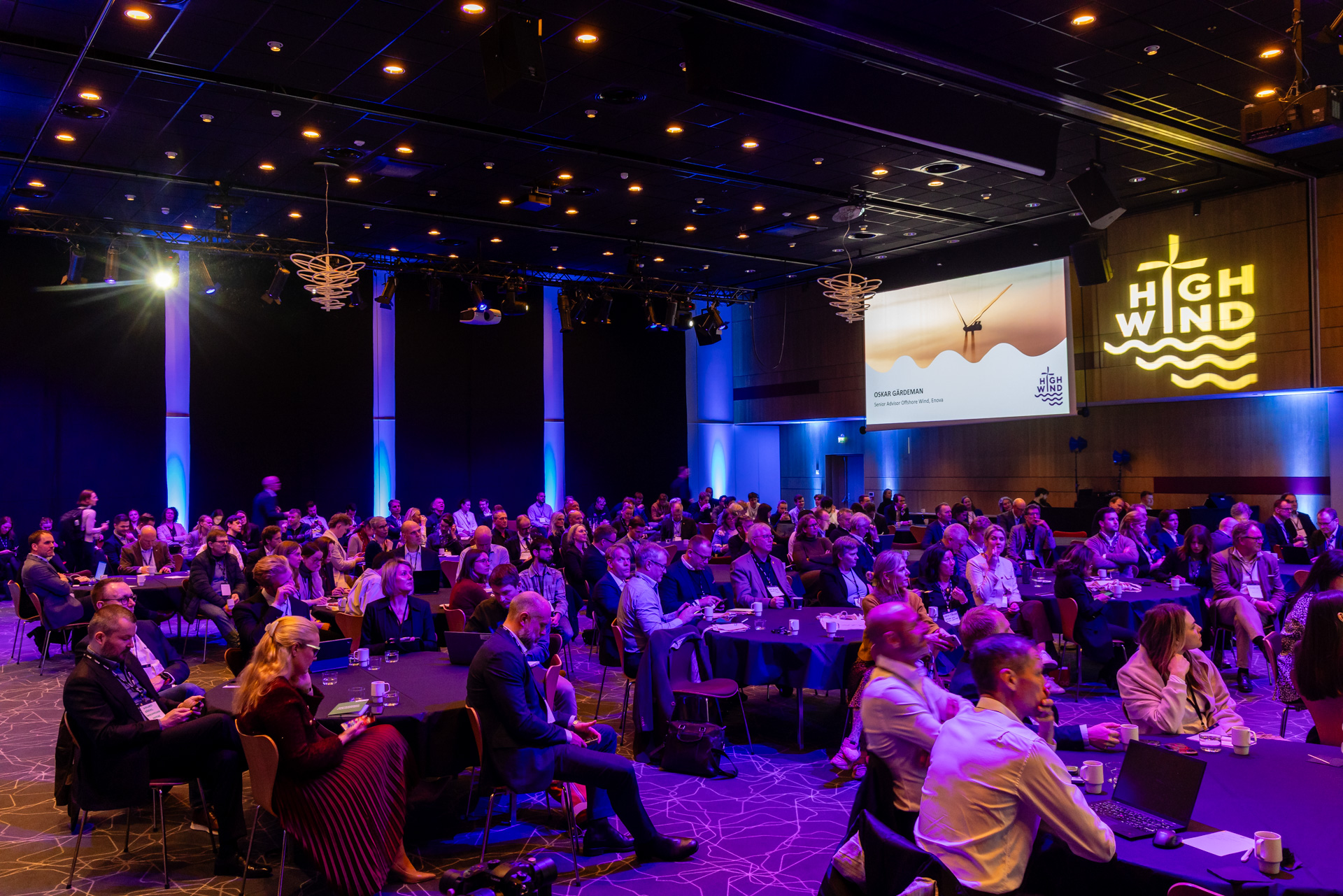
On Tuesday, the sixth High Wind conference was held in Stavanger at the Clarion Hotel Energy. It is the major meeting place where the offshore wind industry from countries around the entire North Sea basin gathers to share experiences, build networks, establish partnerships and discuss the most important topics facing the industry.
Ahead of this year’s High Wind conference, the report LeverandørKRAFT was released – a national industry study aimed at strengthening competitiveness and value creation in Norway’s offshore wind supply industry. The report was prepared by Norsk Industri and the National Competence Centre for Offshore Wind (HavvindNO) in close cooperation with the industry.
Increased by 450%
The report shows that Norway’s offshore wind supply industry has grown rapidly in recent years. Norwegian companies exported offshore wind–related goods and services worth NOK 60 billion in 2024.
Ivar Slengesol, Managing Director and VP at the analytics company TGS | 4C – and chairman of the cluster Norwegian OffshoreWind – finds that impressive. He has worked with offshore wind for nearly 20 years.
“Norwegian exports of offshore wind technologyincreased from NOK 11 billion in 2019 to NOK 60 billion in 2024. That’s a 450% increase in five years. Most of the activity takes placeinternationally, not in Norway,” says Slengesol.
Over the coming years, toward 2030, revenues will likely increase by 10–20% annually.
“It is realistic that Norwegian companies will generate NOK 100 billion in offshore wind revenues before 2030,” Slengesol believes.
Could become one of Norway’s top export industries
At that point, offshore wind would be approaching the top tier of Norway’s export industries. This is happening despite a limited domestic market and hesitant politicians.
“Then offshore wind will be knocking on the door of the four major traditional export industries: oil and gas, seafood, maritime, and power-intensive industry. But to take offshore wind to the next level, you need a domestic market,” says Slengesol.
“Compared with the oil and gas supply industry –which generated NOK 500 billion in 2024 – about 80% comes from the domestic market and 20% from exports. In offshore wind it’s the opposite: 80% exports and 20% domestic market. Over time, oil andgas activity will decline, while offshore wind will increase. This is a clear example of why the domestic market Norway has been promised for 20 years must finally be established. It would give a long-awaited boost to the entire industry– especially smaller companies that find it more difficult to establishthemselves internationally,” says Slengesol.
Twenty years of talk and little action
He believes it is wrong to say that offshore wind companies have been “misled” for two decades into believing offshore wind would take hold in Norway. There is always political risk that must be taken into account, he says. Still, he believes successive governments have been passivein not daring to invest fully.
“There has been a lot of talk and little action. We are almost discussing the same things today that we did 15 years ago. The Offshore Energy Act came in 2010, but it took 14–15 years before the first project areas were awarded. Until just a few years ago, the Ministry of Energy didn’t even have a department working specifically on offshore wind,” says Slengesol.
Yes, Sørlige Nordsjø II is underway. The same applies to Utsira Nord.
“There was more optimism three or four years ago. Sørlige Nordsjø II and Utsira Nord were supposed to move forward, along withnew areas. Now most people realise that Sørlige Nordsjø II has been delayed, Utsira Nord has been delayed and reduced to two project areas. The political situation in Parliament is difficult for offshore wind. There is no majority on either side. Majorities are formed across political divides. The parties that wanted to ‘do something’ have been weakened, while those that ‘do not want to do anything’ have grown stronger. Politics is about more than just industrial policy, but that is the situation now.”
Controversial, but necessary
“Is public opposition to power development – bothon land and at sea – the reason things are moving so slowly?”
“Historically, power developments have always been controversial. Hydropower has been a success, but it also caused major environmental interventions. In hindsight, it proved necessary. Norway has had the advantage of access to clean and inexpensive power for 100 years.”
“We can see that more power is also necessary today. For 15–20 years, we have talked about Norway moving from a power surplus to a power deficit. Still, we have done little about it, while other countries have taken action – phasing out coal and gas in favour of wind and solar.”
Slengesol believes Norway lacks a “sense of urgency.”
“We are heading toward a power deficit, yet we haven’t gotten offshore wind underway. We haven’t built wind on land in recent years. Municipalities have veto power to say no. How wise is that? Not very wise. Should municipalities have veto power when it comes to critical infrastructure? When it comes to hydropower, we talk about upgrading existing plants, but that will mainly increase output in certain periods and will not significantly affect total annual power production.”
Europe is world-leading in offshore wind
Norway holds a strong global position in offshore wind. Much of the expertise has grown out of the oil and gas industry. The offshore wind industry also has its center of gravity in Europe, particularly around the North Sea. The waters here are relatively shallow, the region has high energy demand, and there is long experience with the offshore industry.
“When we are transitioning, we must do it in areas where we already have expertise. Offshore wind is something we know well. We must use the advantages we have. Offshore wind is a European industry. The North Sea basin is the epicentre of offshore wind. An analysis we conducted of 1,500 offshore wind contracts globally showed that 89 % of suppliers in European offshore wind projects are European. Offshore wind is still one of the few green industries where Europe retains a technological lead.”
Today, Norway accounts for only half a per mille of offshore wind projects currently under development worldwide.
“If it continues like this, it will not be interesting for major international players to look to Norway. We want to attract developers and suppliers to the Norwegian market, just as American and French companies participated in developing oil and gas on the Norwegian continental shelf. We are not there now, and it is long overdue to establish a solid domestic market in Norway. We have all the prerequisites to make that happen,” says Slengesol.